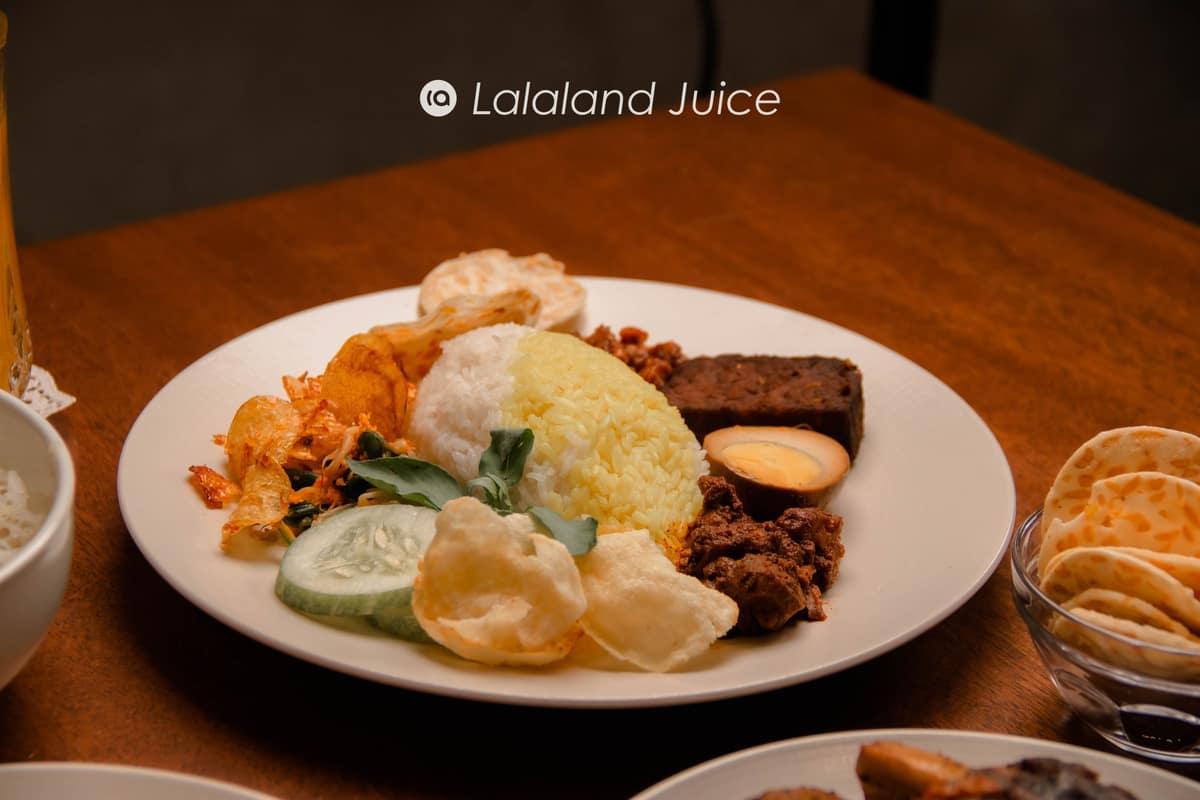
Yes, the cai fan coma is real. A Singapore government careers agency put a number on it: about 85 per cent of workers here reported a "food coma" after lunch — and when they asked what people were eating, the list read like a hawker menu, chicken rice and nasi padang near the top, and the great national default, cai fan. [1]
So if you're fighting your own eyelids at two in the afternoon, you are not lazy, and you are not alone. You're in the overwhelming majority. Here's what's actually happening on that plate — and the small, doable swaps that keep the afternoon yours.
It isn't the rice's fault — it's the size of the plate
Start with the relief: the dip is normal, and it's physical. Sleep tests show drowsiness genuinely rises after eating, usually peaking one to two hours later, and the effect is stronger after larger, higher-energy meals. [2]
That last part is the whole story of cai fan. The dish itself is innocent. What knocks you flat is the monument we build on the tray — rice pressed down twice with the ladle, sweet-and-sour pork, an extra scoop of curry gravy over everything. The bigger and greasier the plate, the deeper the dip. You didn't eat badly. You just asked your body to move a mountain at 12:30, and it sent the bill at two.
What white rice does to your blood sugar (and why we feel it more)
Here's the part worth knowing in plain English. The glycaemic index is simply a scale of how fast a food raises your blood sugar. White and jasmine rice sit high on it — jasmine, the rice under most chicken rice and cai fan, is one of the quickest of all. [4]
And there's a local twist that rarely gets said: Asian bodies tend to spike higher than European ones on the very same plate of rice. [5] A fast spike is usually chased by a dip, and the popular story stops there — "sugar crash."
Be honest, though: the science is less tidy than the meme. Researchers agree the food coma is real, but they still call the exact cause a set of theories — the spike-and-dip in blood sugar, signals from a full gut, a quirk where a carb-heavy meal nudges the brain toward its sleep chemistry. Few have been cleanly proven. [2][3] What's solid is the pattern: big, fast-digesting, rice-heavy plate in, heavy eyelids out.
Some of the 2pm slump isn't the food at all
And here's your second alibi. Part of that afternoon heaviness would arrive even if you skipped lunch entirely — your body clock dips in the early afternoon whether you eat or not. I wrote about that clock in the 3pm ritual. The cai fan doesn't create the dip. It just pours weight onto one that was already on its way.
So we're not fixing a disease. We're taking a normal dip and choosing not to make it worse.
I used to order lunch like it was fuel
For years I ate like the plate was petrol and I was the engine. My cai fan order was a monument: rice packed to the edges, two meats, sweet-sour pork non-negotiable, one lonely stalk of kailan for the conscience. More food, more fuel, more output — the same logic that had me checking in at the gym at 5:15 every morning.
Then two o'clock would arrive and switch me off like a plug pulled from the wall.
It took me a shamefully long time to see it. I was trying to out-eat tiredness the way I'd once tried to out-train it, and the body simply doesn't work like that. You can't power through a nervous system that's busy digesting a hill of rice. Rest is the missing half here too: the afternoon doesn't need more fuel poured on it. It needs less asked of it.
The swaps that actually work — and that you'll actually do
Good news: you don't have to give up cai fan. You just build the plate a little differently, and it costs nothing.
Flip the ratio. Singapore's own Health Promotion Board has a picture for it — My Healthy Plate: a quarter wholegrains, a quarter protein, and half the plate fruit and vegetables. [7] At the stall that isn't a diet, it's just an order. Less rice, one more meat or egg, two vegetables instead of one. "Uncle, rice a bit less" — he's heard it a thousand times.
Eat it in the right order. This one is almost free. In a study at Weill Cornell, when people ate their vegetables and protein first and their carbs last, their blood-sugar spike ran about 29 to 37 per cent lower over the next two hours than when they ate the rice first. [6] It was a small study in people with diabetes, so hold it lightly — but the direction is sound, and starting with the greens and the fish before the rice costs you nothing but the habit. Even the ginger that comes with your chicken rice earns its place at the front of the plate, not the end.
Walk the last five minutes. Not a workout — a walk. One review of the research found that just two to five minutes of gentle walking after a meal is enough to blunt the blood-sugar rise; standing helps a little, walking helps more. [8] The long way back from the kopitiam, one loop past the lift lobby. It beats the fourth kopi, which doesn't switch you on so much as postpone the tiredness to midnight.
What to drink when the rice is done
What you reach for next matters more than it looks. The reflex after a heavy lunch is a sweet bubble tea or a third kopi — sugar stacked on sugar, or a stimulant poured on a system that's trying to slow down. The gentler move is something cold, light and green.
Mine, lately, is a Green Reset — kale, orange, pear and lemon, cold enough to fog the glass, grassy and sharp in a way that feels like the exact opposite of a rice mountain. It's the greens I never ate enough of at the stall, in the one form I'll actually finish.

I drink it because uncapping something cold and bright is the small ceremony that tells the afternoon it can be gentler from here. The stopping does the work. The bottle just marks the hour it begins.
Order the char siew anyway
So order the char siew. Get the sweet-sour pork if it's calling you. This was never about giving up the food we love — cai fan is one of the quiet daily pleasures of living here, and you should keep every bit of it.
Just build the plate a little kinder, eat the greens first, and walk the last five minutes slow. Then let two o'clock come. Meet it with a cold glass and a window, and notice — for once — that the afternoon didn't knock you flat.
It only asked you to slow down. So you did.
Jay Qin is a long-term guest columnist for The Slow Sunday Journal, and the founder of the 5:15 Club.